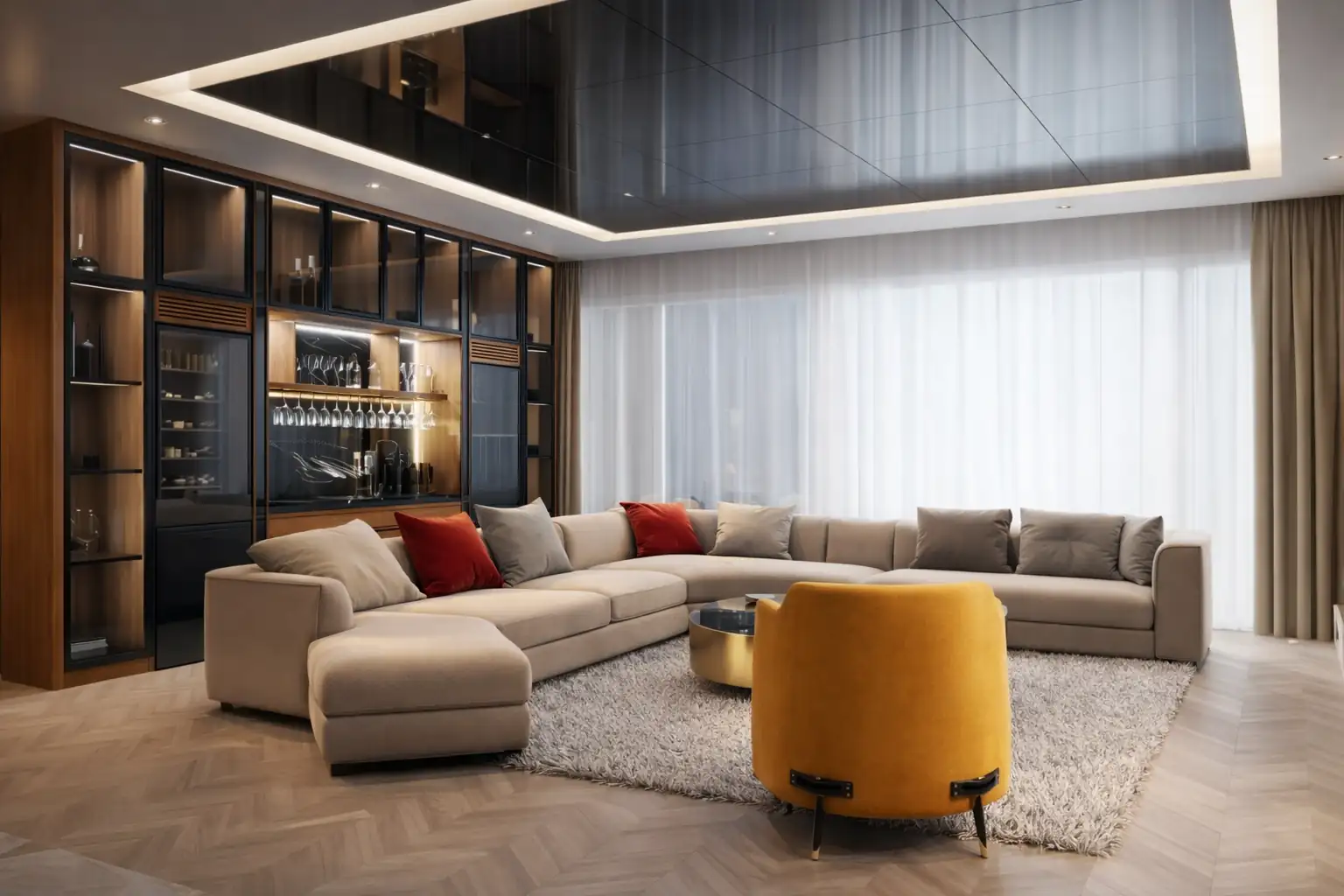
Room-Wise Planning Guide for City Homes
ol li {
color: #000000 !important;
}
ul li::marker {
color: #000000 !important;
}
h1, h2, h3, h4, h5, h6 {
font-weight: 400 !important;
}
ul, ol {
color: black;
}
h1 {
font-family: ‘Heading1Font’ !important;
font-size: 26px !important;
}
h2 {
font-family: ‘Heading2Font’ !important;
font-size: 23px !important;
}
body {
color:#646464 !important;
font-size: 15px !important;
}
h3 {
font-family: ‘Heading2Font’ !important;
font-size: 20px !important;
display: inline !important;
margin: 0 !important;
}
If you’re planning your 3 BHK interior design, you already know that most mistakes don’t happen because of bad taste. They happen because decisions weren’t locked in before execution began. In cities like Mumbai and Bangalore, where apartments range from compact 950 sq. ft. layouts to spacious 1,800 sq. ft. units, planning errors can be expensive. A shifted electrical point, a wardrobe that blocks a window, or a kitchen counter that’s too high for daily use aren’t aesthetic issues; they’re planning gaps.
A well-executed three BHK flat design is built on decisions made early. Designers don’t figure it out on-site. They finalise a checklist room by room, so nothing feels random or rushed. Let’s break down what that actually looks like.
3BHK Interior Design for Living Rooms
In most compact apartments, the living room doubles as the entry foyer. Larger apartments may also have a living room that directly connects to a balcony with large sliding doors. Different basic layouts can require drastically different approaches to living room interior design. Before choosing sofas or finishes, designers finalise:
-
Seating orientation
Is the TV the focal point? Or do you host frequently and need conversational seating? In many 3 BHK homes, festival gatherings mean extra chairs come out. So, circulation of space matters.
-
TV wall proportions
A common mistake in 3 BHK interior design ideas is oversizing the TV unit. For example, in narrower Mumbai layouts, a bulky panel eats up visual width. The top interior designers in Mumbai calculate panel depth and ensure at least 900 mm walking clearance before installing a TV. This simple precaution prevents the room from feeling cramped.
-
Lighting layers
One ceiling light isn’t enough. A premium feel comes from layers:
• Cove lighting for softness
• Spotlights for focus
• Floor or wall lamps for warmth
-
Storage integration
Where do courier boxes land? Where do kids drop their school bags? In Bangalore, homes with working professionals often need a small work nook. Storage is mapped early, so clutter doesn’t creep in later.
Kitchen: Decisions That Cannot Be Delayed

In Mumbai, kitchens are often compact and parallel. In Bangalore’s newer apartments, you’ll find L-shaped or open kitchens. But regardless of layout, certain decisions must be finalised during the 3 BHK interior design process before carpentry begins in earnest.
-
The workflow triangle
Sink, stove, and refrigerator. The distance between these points determines daily comfort. If this isn’t planned, you’ll feel it every single morning.
-
Appliance mapping
Microwave, oven, dishwasher, chimney height. Each appliance needs exact dimensions and electrical planning. Late changes mean redoing tiles or cabinets.
-
Counter height
Standard 32–34 inches doesn’t work for everyone. Designers adjust based on the primary user’s height. This is rarely discussed, but it makes cooking daily easier.
-
Ventilation strategy
In humid Mumbai, chimney capacity matters. In Bangalore, cross-ventilation from balconies helps. Window size, exhaust placement, and material choices are locked in early.
-
Material durability
Gloss laminates look good in photos. But in heavy-use Indian kitchens, matte laminates or acrylic finishes resist fingerprints better. Quartz counters are often preferred for durability and stain resistance.
This level of detail is what separates a functional 3 bHK house interior design from one that just “looks nice.”
Bedrooms: Designing for Routine, Not Just Rest
A 3 BHK home typically includes a master bedroom, a kids’ room, and a guest or multi-use room. Each has different behavioural patterns. When planning for 3 BHK interior design, designers consider each room as its own entity.
-
Master Bedroom
Designers finalise:
• Bed placement aligned to windows and AC vents
• Wardrobe depth (usually 600 mm) without blocking circulation
• Dressing mirror placement with proper lighting
• Bedside lighting at a reachable height
Warm neutral palettes like beige, muted greys, or earthy tones work well because they reflect softer light. Dark colours absorb light and can make compact bedrooms feel tighter.
-
Kids’ Bedroom
For many families, the kids’ bedroom is also their study room. So, the desk location relative to the windows matters. Natural light boosts focus, and storage planning includes hidden drawers for school clutter.
Designers ask practical questions:
• Cove lighting for softness
• Spotlights for focus
• Floor or wall lamps for warmth
Without planning, a 3 BHK interior design becomes reactive instead of proactive.
Electrical and Civil Planning: The Silent Backbone
This is where the most expensive last-minute changes happen. Before execution, designers freeze:
- Switchboard positions
- AC drain points
- False ceiling drop levels
- Internet router locations
- TV and sound system wiring
Once civil work begins, moving these becomes costly. In high-rise gated apartments, society regulations also affect drilling and ducting. These problems can be avoided if designers plan around those constraints from the beginning.
Why Early Finalisation Protects Budget and Cohesion
Premium homes are calm because they’re coordinated. When materials are selected room by room without a master plan, finishes clash. Flooring tone affects wall colour, Wall colour affects curtain choice, and curtain tone impacts lighting warmth.
In a well-planned three BHK flat design, these decisions are layered logically. The result feels intentional, not pieced together. Scope creep happens when storage gets added mid-way, appliance sizes change, and wall finishes are upgraded impulsively. A premium 3 BHK interior design isn’t built on vibes. It’s built with informed decisions made throughout the design process.
When designers finalise seating logic, storage mapping, lighting layers, appliance slots, wardrobe depths, and electrical layouts before execution, the result feels refined. And these refinements are what turn your 3 BHK home into a confident and cohesive abode for the entire family.
How Bonito Designs Ensures Smooth 3 BHK Interior Design Execution
Design success isn’t just creative; it’s operational. Bonito Designs approaches 3 BHK interior design with its LifeDesign philosophy. That means understanding how your day flows before drawing a single layout. Our process typically includes:
- Detailed layout drawings and 3D visualisations to show you what your home will look like
- Material finalisation before execution, considering location, maintenance, and cost
- Planning for electrical and plumbing integrated into 3 BHK interior design
- In-house project execution teams and ISO-certified quality checks
- Structured workflow from design to build to QC to handover
Having deep experience with Mumbai’s compact apartment typologies and Bangalore’s evolving gated-community layouts enables us to anticipate constraints early on. By controlling both design and on-site work, we ensure your finished 3 BHK home doesn’t feel fragmented. So, this is your sign to book a consultation today!
PakarPBN
A Private Blog Network (PBN) is a collection of websites that are controlled by a single individual or organization and used primarily to build backlinks to a “money site” in order to influence its ranking in search engines such as Google. The core idea behind a PBN is based on the importance of backlinks in Google’s ranking algorithm. Since Google views backlinks as signals of authority and trust, some website owners attempt to artificially create these signals through a controlled network of sites.
In a typical PBN setup, the owner acquires expired or aged domains that already have existing authority, backlinks, and history. These domains are rebuilt with new content and hosted separately, often using different IP addresses, hosting providers, themes, and ownership details to make them appear unrelated. Within the content published on these sites, links are strategically placed that point to the main website the owner wants to rank higher. By doing this, the owner attempts to pass link equity (also known as “link juice”) from the PBN sites to the target website.
The purpose of a PBN is to give the impression that the target website is naturally earning links from multiple independent sources. If done effectively, this can temporarily improve keyword rankings, increase organic visibility, and drive more traffic from search results.